ଓଁ
Chaturdwara
The Four Sacred
Gates of the Temple
Four directions, four animals, four philosophies — each gate a threshold between the world and the divine
4
Sacred Gates
4
Cardinal Directions
Moksha
Eastern Gate Symbol
Dharma
Western Gate Symbol
4
Sacred Gates
4
Cardinal Directions
Moksha
Eastern Gate Symbol
Dharma
Western Gate Symbol
The Four Gateways
The Four Sacred
Gates of the Temple
The outer wall of Shree Banikshetra has gates opening to devotees in each of the four directions. These four gates — known collectively as the Chaturdwara — are represented by four sacred animals, each carrying profound philosophical significance rooted in Vedic dharma.
Each gate is not merely an entrance — it is a statement of cosmic truth. As you walk through any of the four gates, you cross a boundary between the ordinary world and the sacred, symbolically aligning yourself with the philosophy that gate represents.
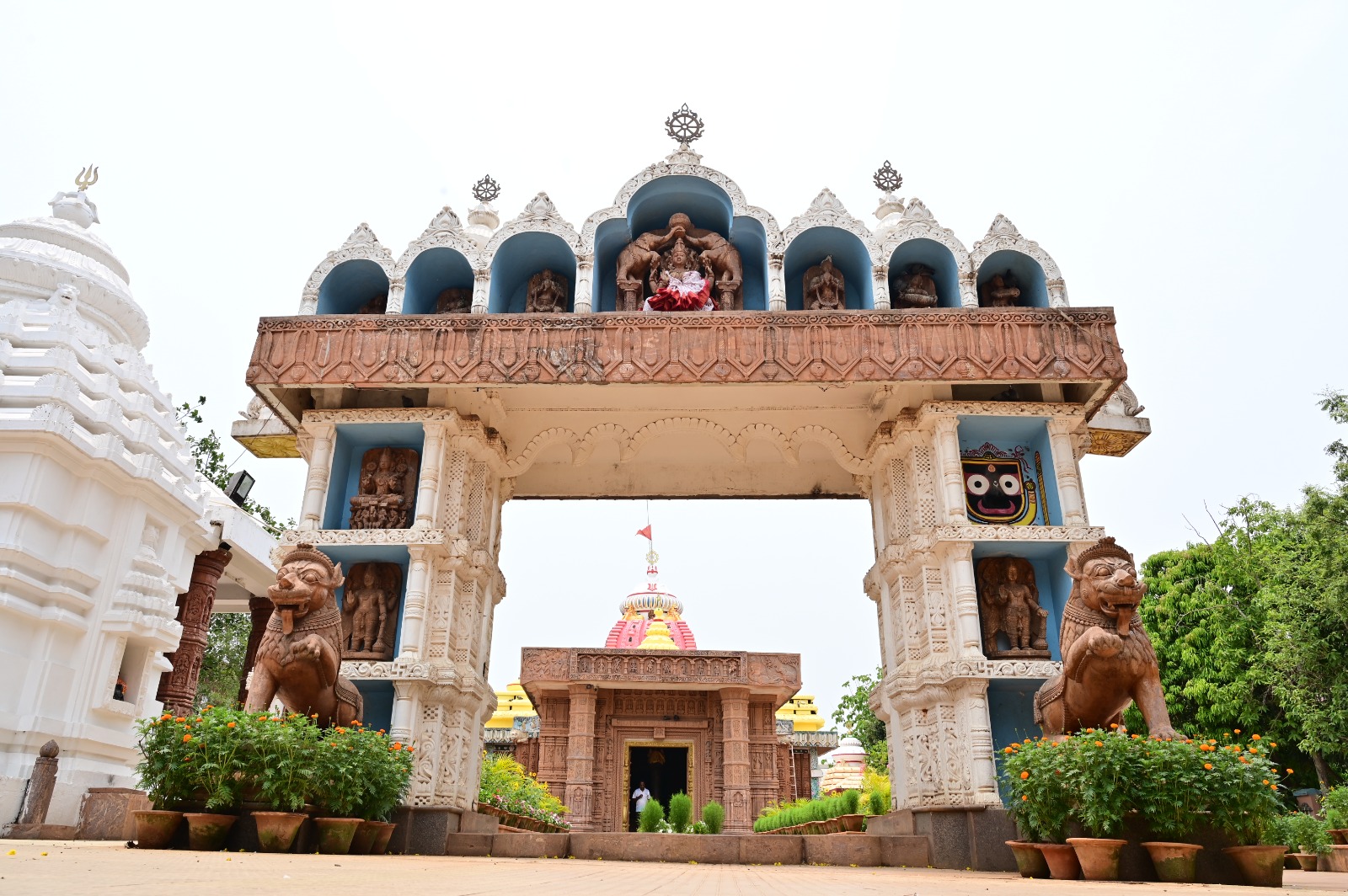
→ Eastern Gate · Main Entrance
ସିଂହଦ୍ୱାର
Symbolises: Moksha (Liberation)
The Lion’s Gate is the main entrance of the temple complex — the most sacred and auspicious of the four gates. The lion symbolises Moksha — the ultimate liberation of the soul from the cycle of birth, death and rebirth. To enter through the Lion’s Gate is to step toward eternal freedom.
Sri Hanuman (Mahavir) stands as Dwarapal — the guardian and gatekeeper of the temple complex — watching over all who enter and exit through this sacred threshold.
Deities Present at Singhadwar
Gajalaxmi
Ganesha
Hanuman
Surya
Jaya-Vijaya
← Western Gate
ବ୍ୟାଘ୍ରଦ୍ୱାର
Symbolises: Dharma (Righteousness)
The Tiger’s Gate faces west — the direction of the setting sun, the end of the day, and the completion of duties. The tiger embodies Dharma — the universal law of righteousness and right conduct that governs all living beings.
Dharma is an important philosophy in Hindu religion — the principle that you adhere to your righteous path in every aspect of life. To enter through the Tiger’s Gate is to renew your commitment to dharmic living.
Significance
Dharma — Righteousness
Duty & Conduct
Western Direction
↑ Northern Gate
ହସ୍ତୀଦ୍ୱାର
Symbolises: Artha (Prosperity)
The Elephant’s Gate faces north — considered the most auspicious direction in Vedic tradition, associated with Kubera, the lord of wealth. The elephant symbolises Artha — material prosperity, abundance, and the fulfillment of worldly duties.
The elephant is also the vehicle of Lord Indra and a symbol of royal power, wisdom and good fortune. Devotees entering through the northern gate seek blessings of prosperity, stability and success in worldly life.
Significance
Artha — Wealth & Prosperity
Royal Power
Northern Direction
↓ Southern Gate
ଅଶ୍ୱଦ୍ୱାର
Symbolises: Kama (Desire & Fulfilment)
The Horse’s Gate faces south — the direction of Yama, the lord of dharma and death. The horse symbolises Kama — desire, passion, and the vital energy that drives all human endeavour. But Kama, when directed rightly, becomes a vehicle for spiritual progress.
The horse is also associated with swiftness, power, and the Ashvamedha — the sacred horse ritual of the Vedas. Devotees entering through the south gate seek the fulfillment of righteous desires and the strength to pursue their life’s purpose.
Significance
Kama — Righteous Desire
Vital Energy
Southern Direction
Vedic Philosophy
The Four Purusharthas —
Goals of Human Life
The four gates of Shree Banikshetra represent the four Purusharthas — the four supreme goals of human existence according to Vedic philosophy. Each gate invites you to reflect on a different dimension of life.
🦁
Moksha
Eastern Gate · Lion
Liberation — the ultimate goal of the soul. Freedom from the cycle of birth and death, union with the divine. The highest Purushartha.
🐯
Dharma
Western Gate · Tiger
Righteousness — the foundation of all other goals. Living in accordance with cosmic law, fulfilling one’s duties with integrity and devotion.
🐘
Artha
Northern Gate · Elephant
Prosperity — the pursuit of wealth, security and material wellbeing in a righteous manner, supporting oneself, family and society.
🐎
Kama
Southern Gate · Horse
Desire — the energy of life itself. Righteous desires for love, joy and fulfilment — when channelled wisely, the fuel for spiritual progress.
“The four gates of the temple are not merely architectural features — they are a complete philosophy of life, encoded in stone, guiding every devotee who crosses their threshold toward a complete and righteous existence.”
— Significance of the Chaturdwara
Before the Gates
The Aruna Stambha —
Sacred Pillar of the Sun
Standing before the eastern Lion’s Gate — the main entrance of Shree Banikshetra — is the Aruna Stambha, a magnificent pillar made of black granite stone. This pillar is named after Aruna, the charioteer of the Sun God Surya.
The Aruna Stambha mirrors the famous pillar that stands before the Lion’s Gate of the original Jagannath Temple at Puri — a deliberate design choice that connects Shree Banikshetra to the ancient sacred tradition of the supreme dhama of Lord Jagannath.
In the tradition of the Puri temple, the Aruna Stambha marks the boundary between the outer world and the sacred precinct — a reminder to devotees to leave behind worldly concerns and enter the presence of the Lord with a pure and humble heart.